
Wrote this paper in December 2023 as an analysis of the online sports betting industry and developments that had taken place following updates to wagering laws in 2018. Through the Uses and Gratification Theory, the industry is explored from an audience perspective and looks at the impact of newer technologies and digital capabilities on individuals and gambling behavior.
Over the last five years, the conversation around sports gambling in the U.S. has shifted toward becoming a more acceptable form of recreation, largely because of national legislation, but also because of the convergence of markets in online sports betting and advancements in technology. The ruling in 2018, stating that the Professional and Amateur Sports Protection Act was unconstitutional, opened the door for states to make their own laws around wagering. These changes allowed for an entirely new framework for how the sports gambling industry could approach the consumer and create products that fulfill the needs and motivations of the sports betting audience. Technology has assisted in the process of allowing the industry to create an interactive environment for sports bettors to place wagers seamlessly during a sporting event through mobile devices and online platforms without the need to be at an in-person venue. This environment has affected the presentation of sports broadcasts and the narrative for how sports betting is promoted and advertised.
Sports betting has dramatically altered its essence from a discontinuous to a continuous form of gambling, with progressively increased availability, accessibility, frequency, and betting options (Lopez-Gonzalez, 2018). Through the Uses and Gratification Theory, we can better understand the evolution of sports betting in the last five years and the growth that has taken place throughout the industry. This theory adopts a functionalistic approach to communications and media, and states that media’s most important role is to fulfill the needs and motivations of the audience (Tajer, 2016). The integration of gambling cultures and gambling activities into non-gambling activities such as sport has been described as “gamblification” (Macey & Hamari, 2022). Gambling is now culturally embedded in sport through marketing imagery and language that seek to evoke emotional connections between the two activities (Hing, 2023). The rapid expansion of new forms of gambling, such as online sports betting, and their marketing with valued cultural activities such as sport (Pitt, 2022), has increased accessibility and the normalization of betting in social spaces where it once might not have existed. The process of normalizing gambling has been defined as: “The interplay of socio-cultural, environmental, commercial and political processes which influence how different gambling activities and products are made available and accessible, encourage recent and regular use, and become an accepted part of everyday life for individuals, their families, and communities” (Thomas, 2018, cited by Hing, 2023).
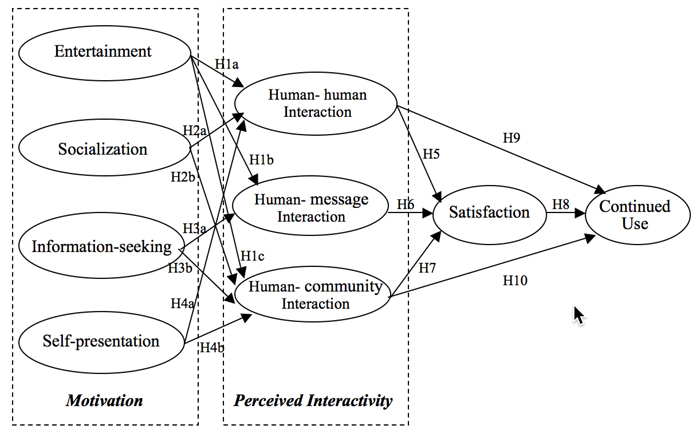
The entrenchment of gambling in professional sport is supported by a symbiotic ecosystem that involves sports organizations, multinational wagering operators, media companies, governments, and sport audiences (Hing, 2022). For instance, major sporting media, such as ESPN, Fox Sports, CBS Sports, Turner Sports, and Yahoo! Sports, have invested and partnered with online sports betting operators, and developed wagering-oriented broadcasting content (Song, 2022). This has also occurred with major sporting leagues such as the National Football League, National Basketball Association, Major League Baseball, and National Hockey League, agreeing to sponsorship deals with the online sportsbook operator DraftKings (Song, 2022). In its transition to a primarily internet-based activity, sports betting has arguably been reconfigured as a consumption product. In the intersection of multiple adjacent industries, online gambling has been said to converge with digital media (King, 2010), social gaming (Cassidy, 2013) and social media (Lopez-Gonzalez, 2018). Another area where convergence has occurred because of mobile platforms, is the ability to place bets in real-time. Users now have the opportunity to place wagers during live events while simultaneously viewing the event through various forms of media and from wherever the user has access. Some jurisdictions in Europe and elsewhere (e.g., Australia) have banned or severely limited the placing of in-play bets due to their perceived addictive component despite the paucity of empirical evidence regarding the detrimental effects of in-play betting (Hing, 2018).

According to the Uses and Gratification Theory model, audience gratifications can be derived from at least three distinct sources: media content, exposure to the media, and the social context that typifies the situation of exposure to different media (Katz, 1973). Media effects individuals based on their unique needs and audiences are active and make conscious decisions about what media they use to fulfill that need. If there is a medium of communication being used by individuals, such as with sports gambling content, there has most likely been a uses and gratifications study conducted on what people seek from the medium (and/or the messages offered through that medium) and what needs are gratified through these mediated experiences (Holbert, 2022). The strength of UGT is its ability to allow researchers to study mediated communication situations via a single or multiple sets of psychological needs, psychological motives, communication channels, communication content, and psychological gratifications within a particular or cross-cultural context (Lin, 1996). In exploring uses and gratifications further, the authors identified 35 needs for how people use media to fulfill a need and grouped them into five categories: Cognitive needs (knowledge, understanding, and acquiring information); ( 2) affective needs (pleasure, emotion, and feeling); ( 3) individual integrative needs (stability, status, and credibility); ( 4) social integrative needs (interacting with friends and family); and ( 5) tension release needs (diversion and escape) (Hatamleh, 2023).
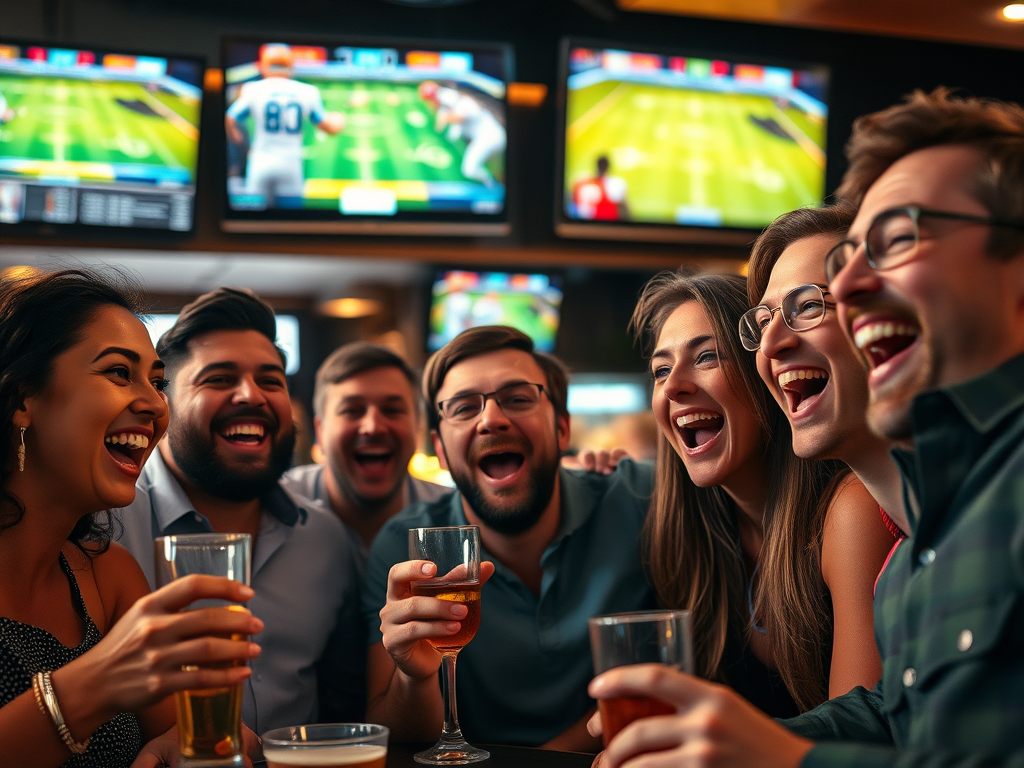
Whereas theorists developed the framework in the 1970s for furthering the understanding of audience needs, later research expanded the model to incorporate newer media and the gratification that comes from using digital technology and internet. For instance, paratextual football programming can serve as an entryway into game broadcasts by establishing narratives in advance, like HBO’s Hard Knocks, a reality series produced by NFL Films that chronicles training camp for a different team each season (Kupfer, 2021). This also holds true with shows geared toward wagering that highlight specific athletes such as fantasy league-related shows or shows predicting outcomes and point totals. Despite anti-gambling rhetoric in the 1970s and 1980s, shows like Jimmy’s Corner, hosted by Jimmy ‘the Greek’ Snyder, a segment on The NFL Today, structured around gambling, flourished on network and cable television (Kupfer, 2021). These types of programs became popular in traditional media settings on television but have evolved to accompany the wide array of formats that exist in the present digital age. Now, individuals have access to sports betting shows and information through blogs, podcasts, email, streaming apps, mobile devices, etc., to encompass user needs beyond the scope of earlier UGT framework. The popularity of these shows also personifies how sports betting is normalized as an accepted feature of sports culture, whereas the behavior is justified and not treated as different or deviant (Hing, 2023).

Sundar and Limperos looked at traditional media (newspapers, television, radio, etc.) as it related to the UGT studies from the 1970s and found that diversion, personal relationships, personal identity, and surveillance were the broad motives and gratifications for using traditional media (Sundar, 2013). Since that time, gratifications theorists have developed many typologies for the needs that users intend media to satisfy (Ruggiero, 2000), including enjoyment, which is a variable in measuring the frequency for how often people use specific forms of media (Ledbetter, 2015). With access to mobile devices, individuals can place wagers to fulfill a need instantly and at the desired frequency to satisfy the need and motivation to gamble. One of the most prominent environmental factors that appeared to trigger a return to gambling is the awareness of the constant availability of online gambling via information technology (Parke, 2019). Technology is a fundamental source for how gratifications have changed for media users. Newer media are characterized by newer functionalities, thereby altering process gratifications. At the same time, they also determine content gratifications by influencing the nature of content accessed, discussed, and created when users interact with media (Sundar, 2013). This is evident in the continued expansion of betting options that now include a vast array of contingencies such as micro-events and various in-match results like penalties or half-time scores (Hing, 2023). Esports is also increasing in popularity, and at a time when some traditional gambling companies are increasingly worried about the potential lack of interest in their products among Generation Z (Biggar, 2023). Other developments in newer media content include virtual reality environments, which not only promote higher levels of engagement with the experimental task, but also promote increased levels of immersion and emotional response (Dickinson, 2020). Further, artificial intelligence technology and machine learning algorithms are now being used as tools for predictive analytics, modeling complex systems, enabling high-speed processing functions, accelerating realistic interactions in virtual environments (speech generation, natural language processing, etc.), and creating sophisticated and personalized user content (Omike, 2021).
The uses of newer media have increased engagement amongst the sports betting audience and contributed to the normalization of gambling behaviors. Types of engagement include casual wagering, ‘facelessness’ of sports gambling platforms via mobile app technologies, ‘free bet’ incentives and in-play promotions, and online sports gambling as a gateway to gambling-related harms such as financial loss (McGee, 2020). To promote this behavior, sports betting is packaged as part of the whole entertainment experience, and thus people who do not bet may feel they are less involved than other fans who take a stake in the outcomes of their preferred players and teams (Hing, 2023). This also occurs with how promotions are embedded in televised sport to include company logos and graphics, celebrity endorsement, static and dynamic advertising, and live studio cross-segments where gambling company representatives discuss movement of betting odds and promote special offers (Lamont, 2016). The convergence of sports organizations with gambling firms, in addition to big data retrieval from sports events, have contributed to these visuals, as well as newer motion-tracking cameras, smart sensors embedded in equipment, wearables, and body response tracking devices (Lopez-Gonzalez, 2018). While traditional advertising methods remain effective for creating new demand, social media marketing for sports gambling has become increasingly pervasive, and, arguably, plays a greater role in enticing new young gamblers (Eisenshtadt, 2022). Often times, the lines are blurred between advertising and entertainment (Eisenshtadt, 2022).

Although historically, sports betting has not been recognized as a particularly risky form of gambling (Lopez-Gonzalez, 2017), many researchers have argued that the development and expansion of the structural features of online sports betting are leading to an increased risk for gambling-related harm (Parke, 2019). Wagering inducements attempt to increase sales through increasing the number of account holders, retaining existing account holders, prompting brand switching, increasing and intensifying purchasing, encouraging future purchasing, and stimulating betting on specific events, during particular time periods, and/or using particular betting channels, such as mobile platforms (Hing, 2015). Many of these functions, including in-play betting, are associated with impulsivity under situations of emotional involvement, and therefore, spectators should be protected by authorities against operators that prompt immediate, biased, poor decision-making, and draw on deep-rooted sporting connections to maximise benefits (Lopez-Gonzalez, 2020). One of the most prominent environmental factors that appeared to trigger a return to gambling is the awareness of the constant availability of online gambling via information technology (Parke, 2019).

Although research addressing the promotion of potentially harmful products through sport, particularly tobacco, alcohol, and junk food, is well established, researchers have only recently commenced examining potential impacts on viewers of gambling promotion through televised sport (Lamont, 2016). Personally targeted advertising unique to the internet, as well as by television advertisements, along with issues such as anonymity, cashless payments, and less government control, may increase online gambling prevalence in comparison to offline gambling (Mora-Salgueiro, 2021). This type of environment has also been reported to pose various risks to pathological gamblers and individuals who experience problems with gambling (King, 2010). Furthermore, it is likely that the harms associated with the digital transformation of sports betting will continue to emerge via innovative advancements if regulatory intervention is not appropriate or forward-looking (Torrance, 2023). Through the Uses and Gratification Theory, we can begin to understand how the intertwining of sports organizations, multinational wagering operators, media companies, and governments, have contributed to the normalization of gambling and increased engagement of the sports betting audience. The audience is an active user in the sports betting arena and through newer media and technology, organizations will continue to find innovative ways to increase access and reach their product users.
References
Biggar B, Zendle D, Wardle H. Targeting the next generation of gamblers? Gambling
sponsorship of esports teams. Journal of Public Health. 2023;45(3):636-644.
Cassidy R (2013) Partial convergence: Social gaming and real-money gambling. In: Cassidy R,
Pisac A and Loussouarn C (eds) Qualitative Research on Gambling: Exploring the Production and Consumption of Risk. New York: Routledge, pp. 74–91.
Dickinson P, Gerling K, Wilson L, Parke A. Virtual reality as a platform for research in gambling
behaviour. Computers in Human Behavior. 2020;107.
Eisenshtadt C. Betting on Oversight: Repurposing Regulations for Cigarette and Tobacco
Advertising to Address Sports Gambling, America’s Fastest Growing Vice Industry.
Administrative Law Review. 2022;74(2):387-419.
Hatamleh IHM, Safori AO, Ahmad AK, Al-Etoum NMI. Exploring the Interplay of Cultural
Restraint: The Relationship between Social Media Motivation and Subjective Happiness. Social Sciences (2076-0760). 2023;12(4):228.
Hing N, Rockloff M, Browne M. A bad bet for sports fans: the case for ending the
“gamblification” of sport. Sport Management Review. 2023;26(5):788-812.
Hing, N., Russell, A. M. T., Li, E., & Vitartas, P. (2018). Does the uptake of wagering
inducements predict impulse betting on sport? Journal of Behavioral Addictions, 7,
146–157.
Hing N, et al. How structural changes in online gambling are shaping the contemporary
experiences and behaviours of online gamblers: an interview study. BMC Public Health. 2022;22(1):1-16.
Hing N, et, al. (2023) A bad bet for sports fans: the case for ending the “gamblification” of sport,
Sport Management Review, 26:5, 788-812
Holbert RL, et, al. “Balancing Field-General and Subfield-Specific Contributions When
Addressing, Utilizing, or Assessing a Theory’s Explanatory Power.” Journal of Broadcasting & Electronic Media. 2022;66(4):515-539.
Katz E, Blumler JG, Gurevitch M. Uses and gratifications research. Public Opinion Quarterly.
1973;37(4):509-523.
King D, Delfabbro PH and Griffiths M (2010) The convergence of gambling and digital media:
Implications for gambling in young people. Journal of Gambling Studies 26(2): 175–187.
Kupfer A, Anderson J. Expert Analysis: The Reciprocal Relationship between Sports Gambling
and Fantasy Football on Television. International Journal of the History of Sport. 2021;38(1):60-78.
Song H. Identifying online sports betting motivations associated with betting intention.
Dissertation Abstracts International: Section B: The Sciences and Engineering. 2023;84(7-B).
Lamont M, Hing N, Vitartas P. Affective response to gambling promotions during televised
sport: A qualitative analysis. Sport Management Review. 2016;19(3):319-331.
Lin CA. Looking back: the contribution of Blumler and Katz’s Uses of mass communication to
communication research. Journal of Broadcasting & Electronic Media. 1996;40:574-581.
Lopez-Gonzalez, H., & Griffiths, M. D. (2018). Understanding the convergence of markets in
online sports betting. International Review for the Sociology of Sport, 53(7), 807–823.
Lopez-Gonzalez H, Griffiths MD, Estévez A. In-Play Betting, Sport Broadcasts, and Gambling
Severity: A Survey Study of Spanish Sports Bettors on the Risks of Betting on Sport While Watching It. Communication & Sport. 2020;8(1):50-71.
Lopez-Gonzalez H, Guerrero-Solé F, Estévez A, Griffiths M. Betting is loving and bettors are
predators: A conceptual metaphor approach to online sports betting advertising. Journal of Gambling Studies. 2018;34(3):709-726.
Macey J, Hamari J. Gamblification: A definition. New Media and Society. January 2022.
McGee, D. (2020). On the normalisation of online sports gambling among young adult men in
the UK: a public health perspective. Public Health, 184, 89-94.
Mehrad J, Tajer P. Uses and Gratification Theory in Connection with Knowledge and
Information Science: A Proposed Conceptual Model. International Journal of Information Science & Management. 2016;14(2):1-14.
Mora-Salgueiro, et, al. (2021). The Prevalence and Clinical and Sociodemographic Factors of
Problem Online Gambling: A Systematic Review. Journal of Gambling Studies, 37(3), 899–926.
Omike, C. (2021). Using AI/Machine Learning in Gambling Applications (Case Study of
Machine Learning for Operational Decision Making in Casinos). Available at SSRN 4025575.
Parke A, Parke J. Transformation of Sports Betting into a Rapid and Continuous Gambling
Activity: a Grounded Theoretical Investigation of Problem Sports Betting in Online Settings. International Journal of Mental Health & Addiction. 2019;17(6):1340-1359.
Pitt H, Thomas SL, Randle M, et al. Young people in Australia discuss strategies for preventing
the normalisation of gambling and reducing gambling harm. BMC Public Health. 2022;22(1).
Ruggiero TE. Uses and Gratifications Theory in the 21st Century. Mass Communication &
Society. 2000;3(1):3-37.
Song H. Identifying online sports betting motivations associated with betting intention.
Dissertation Abstracts International: Section B: The Sciences and Engineering. 2023;84(7-B).
Sundar SS, Limperos A. Uses and Grats 2.0: New Gratifications for New Media. Journal of
Broadcasting & Electronic Media. 2013;57(4): 504-525.
Thomas, S., et, al. (2018). The determinants of gambling normalisation: Causes, consequences
and public health responses. Victorian Responsible Gambling Foundation.
Torrance, J., O’Hanrahan, M., Carroll, J., & Newall, P. (2023). The structural characteristics of
online sports betting: A scoping review of current product features and utility patents as indicators of potential future developments. Addiction Research & Theory.
 The Hankshire